
The EHR, “Pajama time,” and physician burnout
In this article we explore the impact of “pajama time” and physician burnout, and propose radical solutions like: stop working at home.

In this article we explore the impact of “pajama time” and physician burnout, and propose radical solutions like: stop working at home.

In the often grueling world of medicine, physicians are revered as invincible healers—pillars of strength, wisdom, and resilience. We bear the immense responsibility of safeguarding the health and lives of others. But behind the white coats and professional facades, doctors are human too, grappling with the same vulnerabilities as anyone else.

Social connection is good for us. Loss of social connection is a major causative factor in physician burnout. In this article we explore social connection for physician burnout, offering a number of suggestions to reach out and connect for your own wellbeing.

“We lost him”. The surgical resident whispered it under his breath, stepping away from the trauma bay. The blood on his gloves and scrubs, a dull reddish brown under fluorescent lights, told the story of a 12-hour shift spent fighting battles he often lost.

We all talk about the importance of letting go, but they are very few of us that can actually do it well. Perhaps being human makes it so hard.
Yet it is when we let go that things begin to move and what we’ve been hoping and wishing for comes in alignment.

One of the biggest lessons I’ve learned on my Hero’s Journey is the importance of learning to accept ourselves (our full selves).

My journey through the dark night of the soul as a physician was profound and transformative. It challenged my identity, purpose, and resilience, leading to a deep exploration of myself.

Positive affirmations are a powerful tool that can help you fight burnout. If you are feeling overwhelmed by stress, try using positive affirmations to boost your self-confidence and self-esteem. With a little practice, you can start to see a difference in your mood, emotions, and overall well-being.

In this article we explore the concept of the dark night of the medical soul, its characteristics, and the resultant opportunities for growth.

This is part one of a guest blog by one of our senior mentors. She was a groundbreaker as a woman of color studying medicine in the 1970s. Here, she recounts her struggles in Pre-Med.

This is part two of a guest blog by one of our senior mentors. She was a groundbreaker as a woman of color studying medicine in the 1970s. Here, she recounts her first year at Med School far from home.

Protecting the Next Generation of Doctors. The practice of self-compassion has emerged as a valuable tool for medical students, offering support in navigating the pressures, setbacks, and self-criticism that can arise throughout their training. This article explores the importance of self-compassion specifically for medical students, provides an overview of relevant research and studies, and offers a practical guide to cultivating self-compassion in daily life.
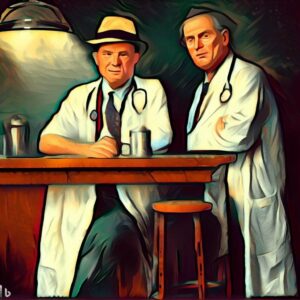
AI art generation in the style of famous artists: can you guess who they are?

To prove that Physicians Anonymous is surfing the wave of high technology, we’ve been playing around with various AI models. Starting with image generators, we’ve been both impressed and horrified by the outputs.

Self-compassion, a practice rooted in mindfulness and self-kindness, has emerged as a powerful tool to support the well-being and resilience of physicians. This hands-on guide will explore the evidence base for self-compassion in physicians and provide practical steps to cultivate self-compassion in physicians’ daily lives.

I believe we can come out of this crisis with a new culture of a caring community. But this is only possible if we invest in self-compassion.

Self-compassion does not make you soft. Boundaries do not make you closed off nor selfish. I had to repeat this many times before I started to understand how true and how essential self-compassion and boundaries are in our lives.
I’ve spent years deeply uncomfortable in my skin. Wanting to disappear.
Last night- a wave of anxiety hit me as it often does when the world gets quiet.
In tune with my body for a brief moment, my heart ached.
Why?

Doctors and those in training are taught to put the needs of others ahead of their own – often to the detriment of their own well-being. Self-compassion can play a vital role in supporting physician wellness and overall work satisfaction.

In a career when we always strive for more, when is enough enough? Dr Jillian Reigert DMD MD one of our Physicians Anonymous Approved Coaches guest blogs on “enoughness”.

The arrival fallacy — the idea that I will be happy when I reach X — can also contribute to mental health issues among physicians, who may struggle to find a sense of purpose and meaning in their work.